

Where It Started
Bremer Valley Agave didn't begin with a plan to build a distillery.
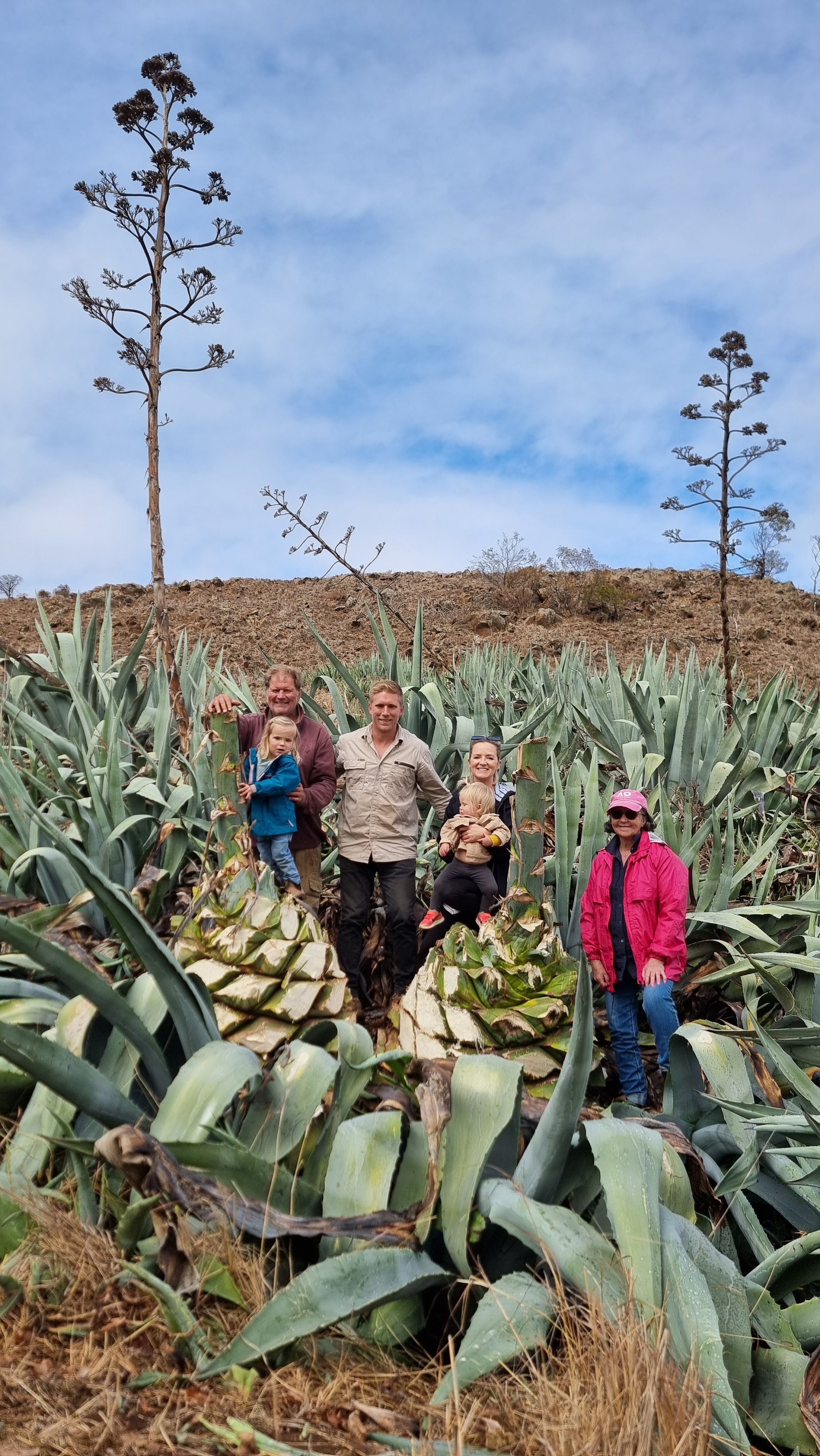
It began with 100 acres of family land in the Bremer Valley — land we wanted to keep in the family and find a productive future for.
After exploring different ideas for the property, we started trials to grow lavender. It seemed like a plant the local wildlife might leave alone — until one spring morning when we returned to find the crop completely destroyed.
Confused, and a few beers later, ‘Pa’ (Geoff) mentioned something he'd said once before:
“You know they make tequila out of those plants down the creek.”
This time, we looked into it.
The plants weren't the Blue Weber agave used for tequila, but they were agave — and agave had a long history of being turned into spirits.
This was our introduction to mezcal.
It wasn't simply the spirit that drew us in. It was the process — the patience, the physical work, the connection to the land and the traditions built around the plant and the people who have worked with it for generations.
Although rare, agave spirits were already being made in Australia, but at the time, no one in South Australia was producing an artisanal agave spirit.
Here was agave growing on our own land, a traditional process we'd become fascinated by, and an opportunity to create something that hadn't been done in South Australia before.
The more we learned about the plant, the more fascinated we became. The more we learned about the process, the more determined we became to do it properly — respecting the traditions while exploring what they could become through an Australian lens.
What started as a search for a productive future for our land had become something much bigger.
The plant we'd barely noticed before was suddenly the beginning of Bremer Valley Agave.
Finding Our Way
Once we decided to give agave a go, we quickly realised that knowing what we wanted to make was very different from knowing how to make it.
There was no local blueprint to follow. We had the plants, plenty of enthusiasm and a growing list of questions, but very little practical knowledge of how to turn Agave americana growing in an Australian paddock into a spirit.
We read, watched, listened and talked to anyone who could help us understand the process. We looked closely at the traditional methods used in Mexico and began working out how we could adapt them to our own landscape.
Then we had to put it into practice.
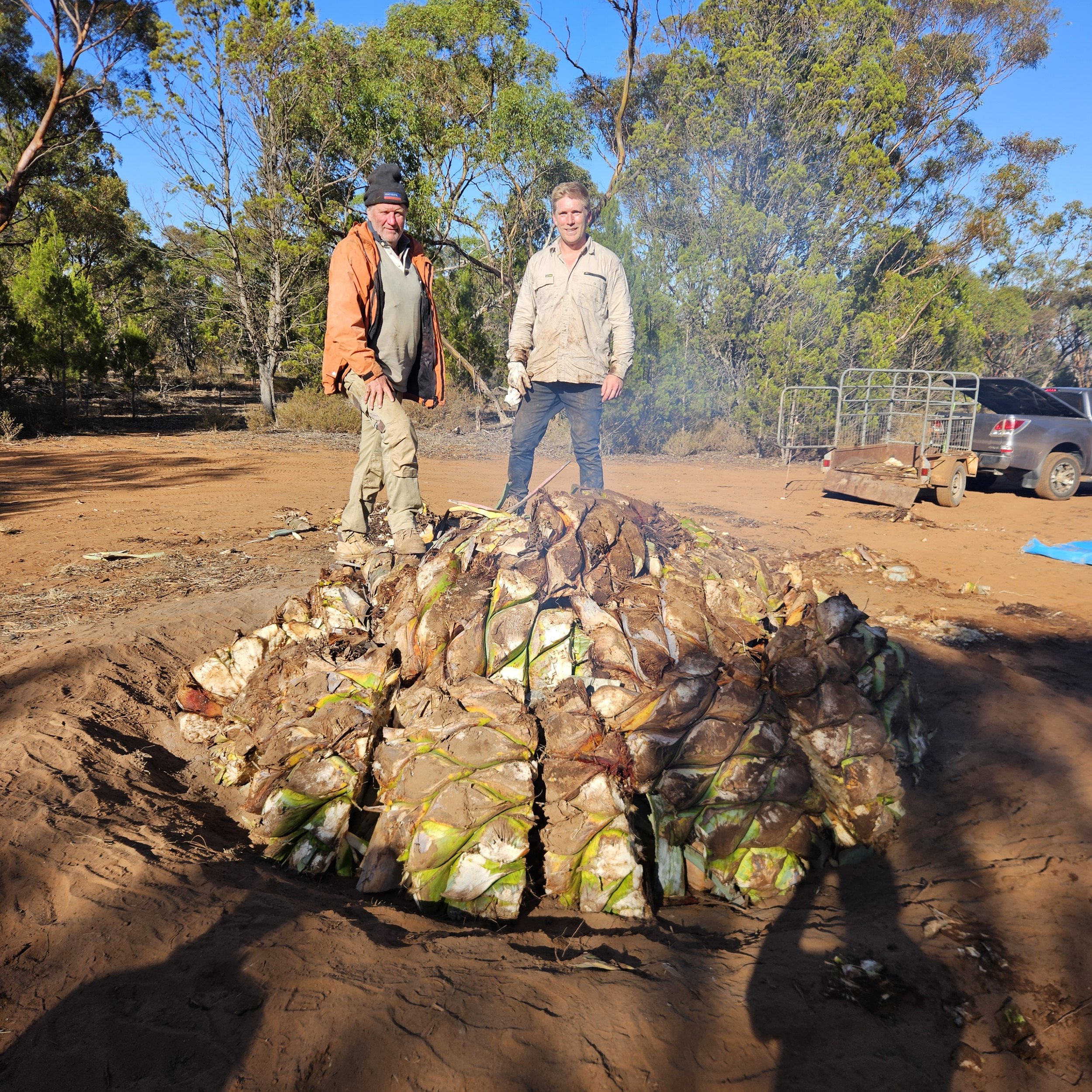
The plants were heavy, tough and covered in spines. Harvesting them by hand was hard work. We built our first earthen pits, sourced local stone and Australian hardwood from the property, and started learning what it meant to cook agave with fire.
From there came cooling, shredding, fermenting and distilling. Every stage brought another set of challenges and questions. How long should we cook it? How long should it ferment? What should we keep? What should we discard?
There was plenty of learning as we went, and plenty of times we pushed ourselves further than we probably should have.
At times, it felt like turning the taps on, walking away and taking the easier path would have been the better option.
Instead, the process became a test of patience.
Our first trial wasn't about making a commercial product. It was about answering one simple question:
Could we turn these plants into a spirit worth drinking?
Thankfully, we could.
In a relatively short, exhausting but exciting period, that first trial showed us that the plants we'd been looking at all those years could become something completely different.
From there, we kept harvesting. We kept cooking. We kept experimenting with fermentation and distillation. We learnt what worked, what didn't, and just how much patience the plant demanded.
So much so that we've come to call agave The Patience Plant.
Nearly two years after that first trial, we finally have our first commercial spirit.
Something that started as a question is now sitting in a bottle, ready to be shared.
More than spirit
Once we started making the spirit, another question started to emerge:
What happens to everything else?
An agave doesn't disappear into a bottle. There is a lot of plant left behind — fibers, cooked material and other by-products from the process.
Rather than treating these as waste, we started looking at how they could be put to work.
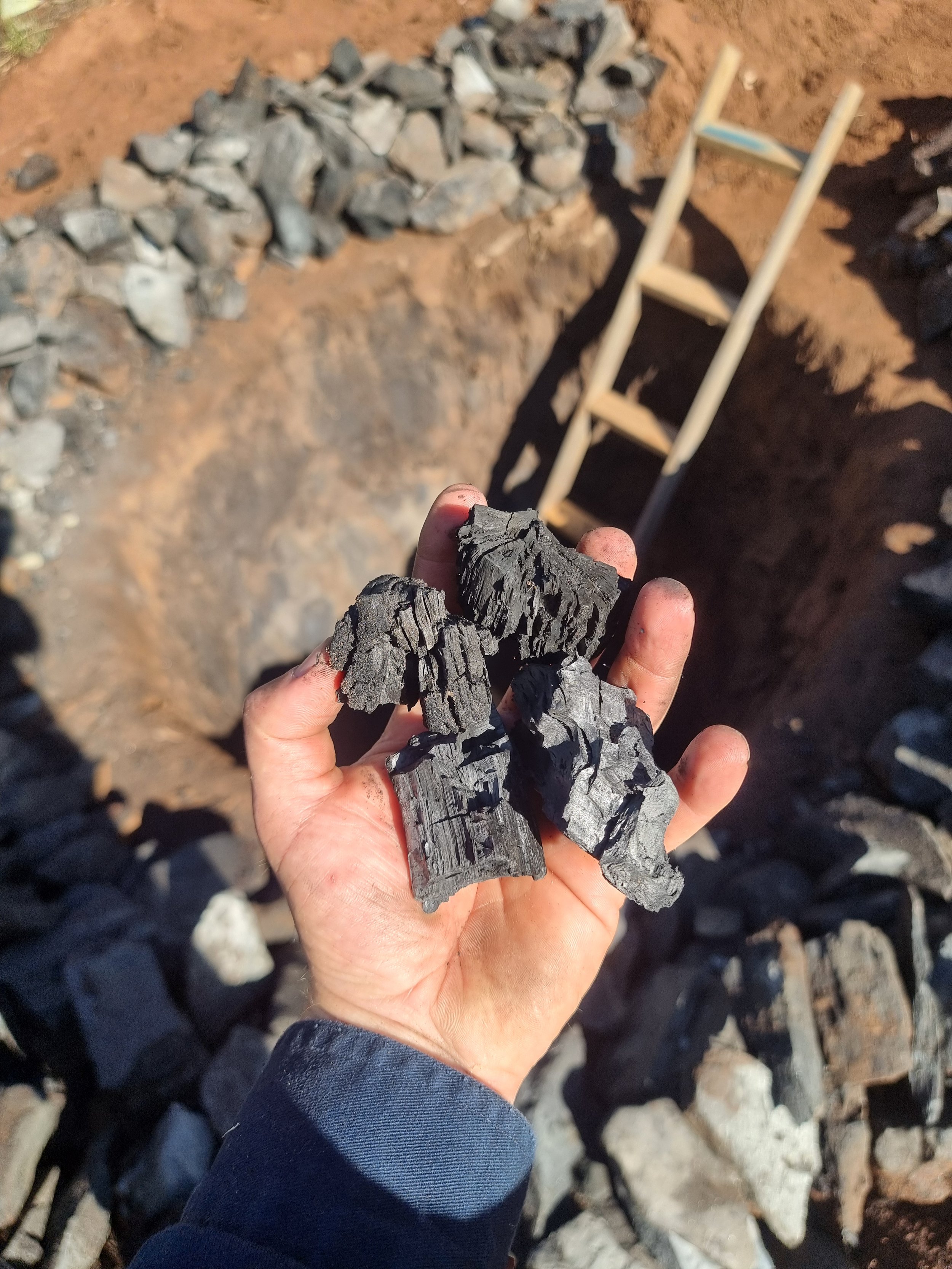
Some material can become biochar, returning nutrients and carbon to the soil. We're exploring opportunities for suitable agave material to be used as livestock feed, while the plant's strong natural fibers have applications in products well beyond the distillery. Even the materials used in our cooking fires have the potential to be repurposed.
It's the beginning of a circular approach to agave, where we look for ways to use more of the plant and create value from what would otherwise be discarded.
We're also beginning to look at establishing other agave varieties, opening the door to different styles and expressions of Australian agave spirit in the future.
As we learn more, we're starting to see opportunities for new products and businesses to develop around agave and its by-products.
The spirit may have been where we started, but it doesn't have to be where the story ends.
There is more to agave than the bottle.
The Destination
We don't have every detail of what this place will become worked out yet.
But we know how we want it to feel.
We want the Bremer Valley to be somewhere people can come to stop the rush, slow down and reconnect.
A place where you can wake up to the valley, walk through the native bushland and wild agave, sit around a fire, share good food and enjoy a spirit made from the land around you.
Over time, we see that growing into something bigger — agave experiences, a restaurant, a syntropic food forest, accommodation, events and spaces to simply sit and take in the landscape.
The food will be part of that connection too, with local produce and meat, ingredients grown here and food prepared around the fire and shared around the table.
We want visitors to be able to get involved, not just look from the outside. To learn about the region's history and agave, see how the spirit is made, get their hands dirty and leave with a story of their own.
Most of all, we want it to feel real.
Not somewhere you come to rush through, but somewhere you stay a little longer than you planned.
A place to put the phone down, look across the valley, share a meal, have a drink and reconnect with the people you're with — and with the place you're in.
What started with a few wild agave plants on family land has taken us somewhere we never expected.
And we're only just beginning to see where it might lead.